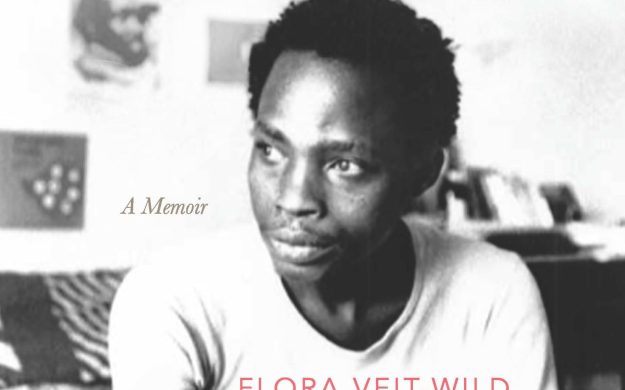
Emily Chow-Quesada reviews Flora Veit-Wild’s memoir of the late Zimbabwean writer, Dambudzo Marechera.
Flora Veit-Wild, They Called You Dambudzo: A Memoir (James Currey, 2022), 300pp.
The talented late Zimbabwean writer, Dambudzo Marechera, left the world at such a young age that he had only managed to publish three books (3 other books were published posthumously). Nonetheless, the conversations provoked by his works have never ceased. While some critics praise his genius, some say that he was simply a writer who was eccentric and produced works that were impenetrable. Even so, the radically individual character of his writing ensures that he is destined to remain a significant figure of African literature. Flora Veit-Wild, Professor Emerita of African Literatures and Cultures at Humbolt University, Berlin, has long been a prominent critic and biographer of the legendary figure. Her memoir that recalls the way in which her own life intertwined with Marechera’s is a book that readers have anticipated for a long time.
Readers of the memoir can tell that the writing of this book was no easy task for Veit-Wild. Indeed, it is a text that reveals the strong bonds and old scars of their relationship. Treading the line between a personal and professional interest in Marechera, Veit-Wild reflects upon a sense of duality that emerged for her towards the end of her memoir:
There was the public face of your biographer and editor, of the teacher, the citric, the Dambudzo Marechera “authority” as people started to call me, the face of the committed scholar who would safeguard your legacy, commended by many, envied and reviled by others. Behind that public face, only known by some, imagined by others. Was the private one, the face of the woman who had loved you and had lain in your arms, had seen you die and had her own physical grievances to bear. (276)
Despite the rigorous negotiations of their relationships, the deep and sometimes tormenting memories that Veit-Wild generously shares with her readers unveils the mysterious life of Marechera. The memories ranged from those about his parents, his childhood, to his studies in Zimbabwe (then Rhodesia) and the UK, as well as the toxic sense of alienation he had after going back to his “home”. Importantly, readers are also offered a glimpse of how his life was crisscrossed with Veit-Wild via her memories of her own upbringing in Germany, her life in Rhodesia as an expatriate, and her involvement in Zimbabwe’s liberation war in the 1970s. These memories that have been carved into the heart of Veit-Wild are multidimensional vehicles that allow readers to not only understand Marechera as a writer but the intellectual development of both Veit-Wild and Marechera. For this reason, readers come closer to the heart of two profound voices of African literature.
Unsurprisingly, one of the most significant motifs of Marechera’s life, as Veit-Wild reveals in the memoir, was his individualism. Indeed, it is via this memoir that readers begin to understand the significance of individualism in making Marechera the “the poetic conscience of the nation” (57). For Marechera, alienation seemed to be a condition that must exist in order for him to write as the writer he envisioned himself to be – that is, a figure who is both rootless and, for that, limitless. This perpetual sense of (self-)ideological exile is both a curse and a blessing to him as well as to the people around him.
In fact, Veit-Wild also writes that she cannot imagine Marechera living in today’s world where everyone and everything are always “connected” to each other. Looking at his Facebook page, Veit-Wild wonders,
You have not lived to know this age of digital communication. Would you have liked it? Would you have ‘posted’? Now others post for you and about you and ‘like’ you and ‘share’ you and create a page for you so that all your thousands of fans in the whole world can read you and about you. (276)
The enigma of the life he would have lived today is, of course, one that cannot be known. But one mesmerising aspect of Marechera’s work that gives some kind of entryway to thinking through this question presents itself the writing that he did for children. Despite the relatively small amount of published work, Marechera was nonetheless a prolific writer. He had written novels, short stories, plays as well as poems, but his writing for children is something that is too quickly forgotten. His faithful readers would have known that a lot of those short stories include illustrations drawn by Veit-Wild’s son, Max. Those stories are much less intense compared with his other work, something reflected in Veit-Wild’s observation that he was often much calmer in himself when he was with Max (101, 105). Nonetheless, the magic of how these moments work remain an open-ended question to his readers.
By the end of the prelude that opens the memoir, Veit-Wild writes that “[y]our waistcoat is now a cultural artefact here in Berlin at the Dambudzo Marechera Archive of Humboldt University. Marechera finally mummified, as someone joked” (5). Mummifying Marechera is perhaps the last thing the memoir has done. Rather, it rejuvenates the life of Marechera again. With Veit-Wild’s memoir that is at times heart-breaking, the “eccentric” life of the (in)famous Zimbabwean writer is put under a microscope. But instead of only seeing Marechera as an individual who seemed only able to live a life that alienated him from everything and everyone, what emerges is an irresistible Marechera whose life is characterised by connection, fluidity, vibrancy, and malleability. It is fair to say that Marechera remains an important yet understudied writer. Veit-Wild’s memoir recentres critical attention – right at the heart of the enfant terrible of African literature.
Emily Chow-Quesada researches on world literature, postcolonial literature, and representations of Africa in Hong Kong. She has published journal articles and book chapters on Anglophone African literature and representation of African cultures. Her current project looks into the representations of blackness in Hong Kong media. She has taught courses in world literature, postcolonial literature, African literature, representations of blackness, and cultural studies.
 HONG KONG REVIEW OF BOOKS 香港書評