Jennifer Wong reviews new poetry collections from two noted contemporary poets.
John Wall Barger, Smog Mother (Palimpsest Press, 2022), 101pp.
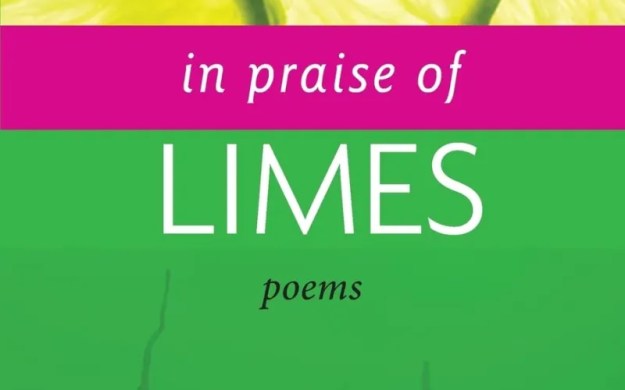
Shirley Lim, In Praise of Limes (Sungold Editions, 2022) 87pp.
Filled with witty, compassionate and finely crafted poems, Canadian-born, US-based poet John Wall Barger’s sixth collection, Smog Mother, brings the reader on an adventure across different places in Asia, as the poet reflects on the dichotomy between the East and the West and the integrity of an uncompromising, receptive self.
Barger is brilliant in his perceptivity, often capturing the everyday with humor and imagination. For example, in “Fireflies” we are shown the surreal nature of the florist’s job,
Who was it that said consciousness
lingers, briefly, after we die?
a florist chain-smokes, stooped
in his outdoorsy stall.
He breaks each rose stem’s neck.
The speaker describes the white tulips that one customer bought as “a kind of candle” as he wonders “at the grace / of these embers.”
In “100 Doves Released for Wedding Pictures at Swan Lake in Hefei, Anhui Province, China,” cruelty is exposed without mercy, as the reader is confronted with the following image: “(a) dove flaps inside a church / of fingers.” The poem ends with a shocking scene, where the grandmother attempts to kill a dove while the grandfather takes part in a detached way: “humming, lights the grill.” More than an anecdote, it feels as if the poem is a fable on what kind of cruelty one is capable of not just individually but collectively.
Featuring an expansive and ambitious range of poems, Smog Mother explores the idea of one’s love and tenderness for the world. For example, in “By the Halal Chicken Shop.” the reader is shown an imaginary conversation with the grandmother who asks the speaker about Tiina, the girlfriend, even though the grandmother has died a while ago. In return, the speaker captures his/her/their feelings for Tiina with this poignant, tender image:
Just look how she holds
the filthy puppy
against her turquoise coat
in front of the halal shop
With such evocative imagery and candid voice, the poet invites the reader to a moment of “seeing” together, making the act of caring for the ”filthy puppy” an act of love and generosity.
In many of Barger’s poems, the themes of nationhood, belonging, capitalism, and the meaning of life are all interrelated. Often the speaker looks inward to reflect on one’s sense of identity and purpose in life, as well as to become aware of the relationship between the self and the surrounding world of people. For example, in “Delirious in the Pink House,” the speaker confesses his/her identity:
‘I’m the big flappy American poet
the one in the over-
sized Pink House
in a village in the Himalayas.’
In the second part of the poem, the speaker boldly says: “Teach me suffering! / Take me on the goat trails / of the heart!” The dramatic voice offers us a way to see almost the impatience of the speaker in consuming this new place or culture, the tourist’s hunger for some new or exotic experiences that he can claim to acquire or bring home.
Perceptive and filled with curiosity about life and wisdom from the living, the long poem “Dukkha” takes the reader on a journey in India, as the speaker observes everything curiosity and sympathy, being conscious of one’s position as a tourist or outsider, while remaining receptive to moments of beauty and undiscovered truths: “Speaking to him I can smell my ignorance” while “[a] man howls Hindi songs / On the hills above.” At the same time, the portrayal of this very different part of the world that follows its own logic and culture comes across so vividly:
Farm animals walk free
Goats sheep horses
Tiptoe the roads
A scooter lets rip a banshee wail
A cow turns her head
Shyly
Barger’s sophisticated collection not only reminds us of the importance of craft, but one’s endless wonders with what language can do or redeem, and the endless possibilities for one to experience the history and culture of a place, and the infinite stories of its people.
While Barger’s Smog Mother offers transnational moments of displacement, homecoming, grief and love, Shirley Lim’s most recent collection In Praise of Limes also introduces the reader to an interconnected world, but one with a focus on the sentient world of feelings in Nature. Dana Goia in the preface describes Lim as having “put a planet on the table, a ‘homemade world’ of her own experience.” With this 11th collection from Lim, a leading scholar in Asian American literature, we can see her trust her instincts in wielding poetic language and voice.
In the title poem of the collection, “In Praise of Limes,” the speaker makes a connection between Nature outside the house and those who live inside the house:
Come late March the limes appear on sidewalks
where we pick two, three, or give most mornings
for our breakfast table.
The speaker draws strength from the fertility and cyclical changes in Nature, and through the repetition of “although” in the poem, reaches an understanding that one cannot give up praise regardless of circumstances:
Although new and old split apart, unknown
to each other, we will persist in praising
the lime tree spring, newcomers to our town,
too many for the breaking earth to tear down.
Some of the poems are a witty retelling or remaking of myths. For example, in “Persephone,” we find ourselves face-to-face with a Persephone who is uneasy with America:
No pills can tranquillize to allay
America, our mother, whose daughter’s
ransom price daily rises higher.
Poems such as “Things That Make Me Happy” is an ars poetica that traces one’s ability to see beyond an artificial sense of nationhood to a genuine belonging that is not geographically located but situated within one’s love for writing: “That I rise at 3 a.m. to write. / That everywhere is full of poems, / not just in America.”
I also find myself curious about the complexity of the ‘I’ across many of these poems, this perceptive, multi-faceted self filled with longing and courage. In “April Heat Wave,” the speaker shifts between the past and the present, the intensity of the environment as the people collectively experience an April heat wave, with the intensity of one’s personal, incoherent fears:
I’ve forgotten how not to hope. We throw open
the windows, draw water we do not have,
as if wishes are promises are heaven
on earth, and here and now forever safe.
Some of the poems are wonderfully individualistic, punctuated with wry humor. Written in couplets, “Cassandra” offers a contemporary spin on the mythical figure, as the reader sees a solitary female figure away from the crowd: “This Cassandra opens a bottle of red, / begins drinking early alone, in bed.” Unlike the mythical Cassandra, here we can catch a glimpse of her genuine self: “She’s depressed. No thanksgiving will lift / her day.”
One of my favorite poems is “Heron,” a short poem that focuses on the sighting of a heron that becomes symbolic of one’s impossibility to capture the fleeting moments of beauty and of life:
I fumble for the image, shuttering
the camera in my chest, its click
too distant to scare the hungry
elegant gent off the gophers
airing in dew-moist puddles thick
with roots.
Bold, honest, and evocative, Lim’s collection offers a way to appreciate one’s necessary and poignant connection with Nature and one’s ability to draw strength and understanding from such a vital connection.
Jennifer Wong was born and grew up in Hong Kong. She is the author of several collections including 回家 Letters Home (Nine Arches Press) and Identity, Home and Writing Elsewhere in Contemporary Anglophone Chinese Poetry (Bloomsbury Academic). She has a PhD in creative writing and is a tutor at Poetry School.
 HONG KONG REVIEW OF BOOKS 香港書評